

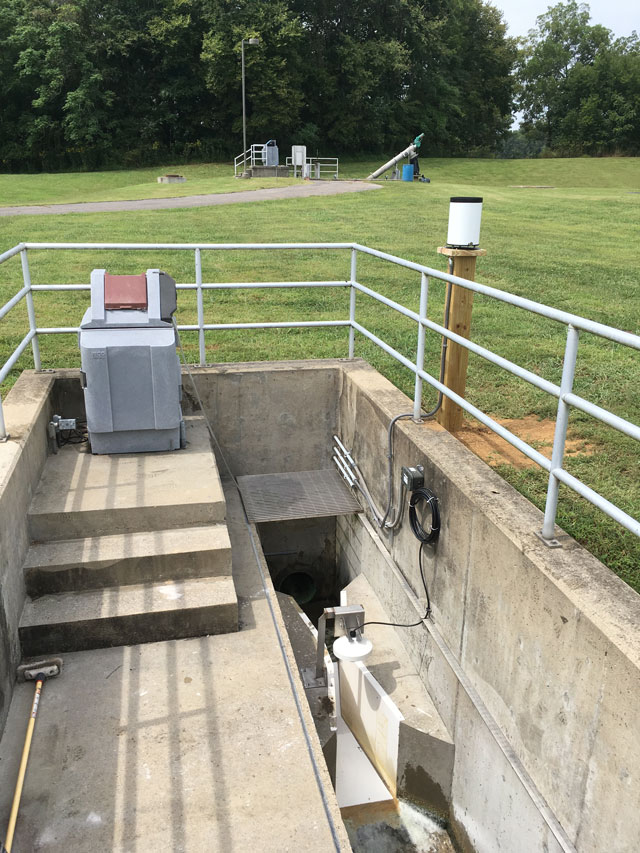
Welcome to the February edition of the Gripp, Inc. newsletter. This month, we're focusing on the leading causes of inaccuracies in WWTP flow measurements, particularly issues related to ultrasonic level sensors installed over primary flow structures (flumes and weirs).
Key issues and solutions include:
Algae Growth
This can cause artificially elevated flow readings. To mitigate, inspect and clean the primary flow structure as needed and cover open areas to prevent sunlight from promoting algae growth.Absence of Level Sensor Sunshade
Without a sunshade, direct sunlight will affect the sensor’s temperature compensation, resulting in inaccuracies of flow measurement. Installing a sunshade is recommended.Improperly Installed Flow Sensor Mounting Brackets
Sensor Mounting Brackets that are not level or rigid can lead to inaccuracies. It's best to use the recommended factory sensor mounting hardware and brackets along with the appropriate gaskets.Excessive Steam Near the Sensor
To prevent water droplets from forming on the sensor face, which can cause inaccuracies, we often install horizontal ultrasonic mounting brackets. These brackets help eliminate water droplet formation and address flow sensor dead band issues during high-level flow events.Excessive Turbulence, Waves, or Debris
These can be mitigated by installing a stilling well or baffle plate.Incorrect Sensor Placement
Ensure that ultrasonic level sensors are mounted in the correct position relative to the primary flow structure as specified by the Teledyne ISCO Open Channel Flow Measurement Handbook.
Additionally, it’s always a good idea to install a staff gauge in your primary flow structures to allow for quick verification of the secondary level measurement device's calibration against a Teledyne ISCO Open Channel Flow Measurement Handbook. We hope you find this information useful. We're eager to be of further assistance and welcome the opportunity to schedule an on-site visit to address any flow measurement challenges you're facing. |